
Research paper completed by Geordie Shields – Director, TOPSHAPE Business and Fitness 22.07.2026
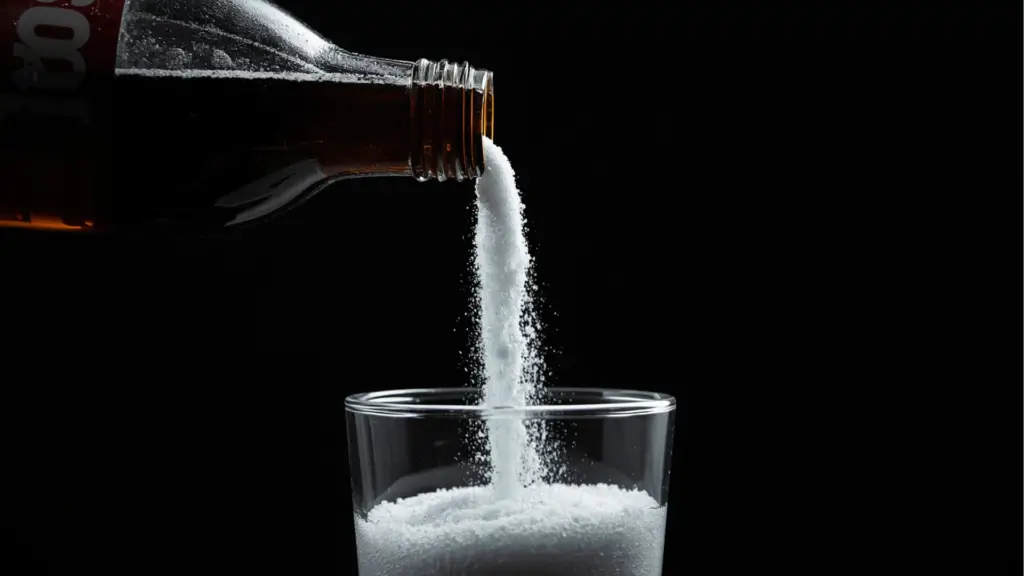
It is a quiet, sterile Tuesday morning in South Auckland, and a four-year-old boy is being gently wheeled into an operating theatre. Within minutes, a paediatric anaesthetist will administer a dose of general anaesthetic. Once he is asleep, a dental surgeon will pick up a pair of surgical forceps and systematically extract several of his baby teeth. They are black, decayed, and rotten down to the gum line, ruined by a daily bath of cheap, liquid sugar
This scene does not play out once a week. It happens nearly every single day across Aotearoa New Zealand. Paediatric dental caries is now the single leading cause of avoidable hospital admissions for young children in this country. Every year, New Zealand taxpayers spend more than $20 million purely to put children under general anaesthesia to rip out teeth that could have been saved.
In June 2026, the New Zealand Beverage Guidance Panel (NZBGP), a coalition of the country’s leading public health academics, nutritionists, and clinicians, released a landmark policy brief. Their goal was clear: implement a nationwide, government-mandated “Sugary Drink Free Schools” policy. The brief proposes a ban on the sale and consumption of any beverage containing 5 grams or more of sugar per 100ml on school and early childhood education (ECE) grounds.
Crucially, the policy includes a pragmatic political olive branch: it permits zero-sugar alternatives and low-sugar juices containing less than 5g of sugar to foster broad, cross-parliamentary consensus. But as public health advocates celebrate the NZBGP’s proposal as a step in the right direction, a quiet consensus is growing among policy analysts. School-based bans are like putting a plaster on a significant chest wound. They are necessary, yes, but they do not go nearly far enough. To understand why, we must look outside the school gates and into the suburban streets that wrap around our children’s lives.
The Geography of Temptation
If you want to know what a child’s health will look like when they are thirty, do not look at their DNA. Look at their postcode.
In Aotearoa, commercial harm is spatially targeted. Landmark geospatial epidemiology studies conducted by Pearce, Wiki, and colleagues have laid bare a stark, mathematically linear reality: the physical infrastructure of unhealthy profiting liquor outlets, fast-food joints, and high-sugar convenience retailers clusters aggressively where land is cheap, corporate pushback is minimal, and vulnerable populations live.
If you walk through a high-deprivation suburb in South Auckland or Porirua, the travel distance to an independent liquor store or a fast-food counter is significantly shorter than in a wealthy enclave like Auckland’s Remuera or Wellington’s Fendalton. These suburbs, home to disproportionately high concentrations of Māori and Pacific whānau, are literally saturated with physical retail designed to turn geographical convenience into chronic disease.
Worse, our school children are forced to run a daily gauntlet. Longitudinal analysis tracking urban environments near schools found that the number of fast-food outlets within an easy walking distance (800 metres) of New Zealand schools has quadrupled over a multi-decade period. And in a finding that exposes the environmental injustice at the heart of our cities, this commercial proliferation is heavily concentrated around the most socially deprived decile schools. Lower-income children are targeted from the moment they step off the school bus.
To measure the true extent of this mental siege, researchers from the University of Otago and the University of Auckland launched the groundbreaking Kids’Cam project. They equipped hundreds of children with small, automated wearable cameras that clicked a photograph every seven seconds of their daily lives.
The resulting millions of images were a revelation and a cause for concern. The cameras proved that a typical New Zealand child is exposed to an average of 27 junk food ads, 7 gambling ads, and 4.5 alcohol ads every single day. This advertising isn’t floating in cyberspace; it is physically plastered on shopfronts, street signs, dairies, and bus stops in lower-income neighbourhoods. The study calculated that simply banning the marketing of these harmful commodities within 400 metres of public transport hubs would instantly slash a child’s total exposure to toxic commercial messaging by a staggering 86%.
Yet, while local city councils bear the front-facing social and financial costs of this clustering in community degradation, emergency department strain, and vandalism, they find themselves legally handcuffed by the central government. Under the current coalition government’s platform of “pro-business deregulation,” the policy focus has swung heavily toward cutting red tape for corporate actors at the expense of community health.
The recent repeal of the world-leading 2022 Smokefree legislation, which would have slashed tobacco retail numbers by 90%, was a devastating blow to public health academics who noted the policy would have disproportionately saved Māori and Pacific lives. Simultaneously, the central government’s moves to ease licensing restrictions for the hospitality sector have drawn fierce condemnation from local councils, who argue that making it harder to object to new liquor store placements strips local citizens of their democratic right to protect their own saturated neighbourhoods.
It is a bitter ideological war. Local boards attempting defensive zoning to insulate their communities from transport poverty and air pollution (such as the high NO2 and PM2.5 vehicle emissions that cause elevated childhood asthma hospitalizations in cheap housing corridors next to arterial highways) versus a central administration that views public health regulations as “compliance red tape.
A History of Voluntary Failure
How did we get here? To trace New Zealand’s political dance with sugar is to observe a masterclass in bureaucratic whiplash and corporate self-regulation.
In 2006, the then-Labour-led government took a bold step and added a clause known as “Clause 5, Section 3” to the National Administration Guidelines (NAGs). It was a simple, common-sense directive, where food and beverages were sold on school premises, schools were required to make only healthy options available. Unhealthy items, including high-sugar sodas and processed treats, quickly exited tuckshops and canteens across the country.
The health benefits were immediate, but the policy’s life was short. Then, in 2009, a newly elected National-led government swept in and promptly revoked the clause, declaring it an instance of “nanny state” overreach. Unhealthy, sugar-saturated items re-emerged on school shelves almost overnight, leaving public health advocates back at square one.
Since that whiplash, successive central governments have flatly rejected calls for a sugary drink tax, opting instead to rely on voluntary food industry guidelines, industry-led front-of-pack labelling schemes, and polite entreaties to corporate goodwill.
But “voluntary agreements” in the public health arena are a historical mirage. In 2006, Coca-Cola Amatil NZ and Frucor Suntory signed a high-profile Memorandum of Understanding (MOU) with the Ministries of Education and Health to remove full-sugar carbonated sodas and energy drinks from secondary schools by 2009. In 2017, the NZ Beverage Council, representing major players like Red Bull and Better Drinks Co, proudly announced a policy committing its members to sell only bottled water to primary and intermediate schools, and to restrict sales of sugary carbonated sodas to high schools.
To the casual observer, it sounded like corporate responsibility in action, but, in reality, it was a beautifully constructed regulatory bypass.
Sugary drinks continue to saturate New Zealand schools for two glaring reasons:
- First, school canteens are frequently contracted out to private, independent operators. These businesses do not purchase their stock from beverage wholesalers bound by high-minded MOUs. Instead, they buy their crates of full-sugar drinks directly from local supermarkets and cash-and-carry stores, completely bypassing voluntary manufacturer agreements.
- Second, the industry’s voluntary restrictions apply almost exclusively tocarbonatedsoft drinks. They conveniently exclude a massive, highly profitable category of non-carbonated sugary drinks: juices, sports drinks, and sweetened dairy milks, which have exploded in popularity and kept national liquid sugar consumption at historically high levels.
Leaving the health of our children to the voluntary consent of multinational junk food manufacturers is like asking the fox to design the security system for the chicken coop. It is a policy framework that has failed, and the proof is written in the biochemistry of our children’s bodies.
The Silent Engine of Metabolic Syndrome
To truly understand why liquid sugar is so uniquely destructive, we must take a journey inside the human liver.
For decades, the public has been told that “a calorie is a calorie” and that 100 calories of broccoli is metabolically identical to 100 calories of Coca-Cola. It is a lie that has served the processed food industry spectacularly well. In truth, the chemical structure of what we consume dictates how our body processes it.
Standard table sugar (sucrose) and high-fructose corn syrup (HFCS) are composed of two simple sugars: glucose and fructose. Glucose is the baseline fuel of life on Earth. Every cell in your body, from your brain to your big toe, can metabolise glucose. If you consume excess glucose, your body releases insulin, which shuttles the sugar into your muscles or stores it safely as glycogen.
Fructose, however, is a completely different beast. It cannot be used by any organ in your body except one: the liver. Fructose is, metabolically speaking, processed like a toxin.
When you drink a bottle of juice, a tidal wave of fructose and sugar hits your small intestine and is rapidly absorbed into the portal vein, travelling straight to the liver. Because the fructose is in a liquid format, it has a rapid gastric emptying time, where it enters the liver cells at extreme speed and concentration.
Once inside, an enzyme called fructokinase C immediately goes to work, rapidly phosphorylating the fructose into fructose-1-phosphate. This process is so fast and unregulated that it causes an immediate, catastrophic drop in intracellular ATP, which is the cellular energy currency of your body. As ATP is depleted, the cell is forced to degrade adenosine monophosphate (AMP) into uric acid.
Within fifteen to thirty minutes of drinking a sugary beverage, your blood level of uric acid spikes. This uric acid is not benign, as it blocks an essential enzyme called AMP-activated protein kinase (AMPK) and induces severe mitochondrial oxidative stress.
The result of this intracellular energy crisis is a three-pronged metabolic disaster:
- De Novo Lipogenesis (New Fat Generation): The liver is forced to convert the excess fructose directly into fat. This fat deposits inside the liver cells, causing Non-alcoholic Fatty Liver Disease (NAFLD), a condition once seen only in chronic alcoholics, now increasingly diagnosed in primary-school-aged children.
- Mitochondrial Burnout: The oxidative stress shuts down the liver’s ability to burn fat, leaving it sluggish and energy-depleted.
- Insulin Resistance: As fat accumulates in the liver, the organ stops responding to insulin, forcing the pancreas to pump out more and more of the hormone, eventually leading to type 2 diabetes.
Liquid sugar is a metabolic cruise missile, because it lacks the natural fibre of whole fruit, which slows gut transit time and allows the liver to process fructose gradually, it completely overloads the liver’s metabolic capacity”. And the downstream economic consequences of this cellular crisis are staggering.
Treating metabolic syndrome and its related diseases, type 2 diabetes, heart disease, gout, and obesity-related cancers, now consumes more than $2 billion every single year. This is a massive 8% of New Zealand’s entire national healthcare budget.
By 2020, treating type 2 diabetes alone was costing $1.07 billion annually. But the medical bills are only half the story. The lost economic productivity from New Zealanders dying early, leaving the workforce due to disability, or suffering from chronic illness and depression adds another $7.0 billion to $9.0 billion in indirect societal costs.
In diabetes alone, the cost of lost productivity ($1.06 billion) matches the direct medical treatment cost dollar-for-dollar, representing a total annual drain of $2.18 billion on our economy.
New Zealand taxpayers are absorbing 100% of this multi-billion-dollar bill, while the multi-billion-dollar sugar and junk food industries pay zero dollars in targeted excise taxes to offset the damage they leave in their wake. It is a pure fiscal deficit, funded entirely by your tax dollars.
The Mirage of the Outright Ban
Faced with these horrific clinical and fiscal numbers, some public health advocates have proposed the ultimate regulatory weapon. An outright ban on standard, full-sugar soft drinks.
Under this hypothetical policy, liquid free sugar would be treated as a controlled toxic substance, similar to lead in paint or trans fats in food. Standard Coca-Cola, regular Sprite, and full-sugar energy drinks would be legally prohibited from manufacture or import, leaving only water and sugar-free alternatives on the shelves.
It is a seductive idea, as a total ban would instantly bypass the food lobby’s primary weapon against a sugar tax, the argument that taxes are regressive and penalise low-income families during a cost-of-living crisis. A ban costs the consumer nothing extra. It simply forces the manufacturer to reformulate the product matrix at their own expense. It would instantly sanitise the food environment in lower-socioeconomic suburbs where fast-food and dairies cluster.
But as any student of historical prohibition knows, outright bans are a political and operational mirage.
First, a blanket ban on a globally standardised, highly popular product like regular Coca-Cola would trigger immediate, massive legal challenges under international trade agreements like the World Trade Organisation (WTO). Multinational corporate lawyers would tie the New Zealand government up in international courts for decades, arguing the ban represents an unscientific, non-tariff barrier to trade.
Second, an outright ban would immediately spark a highly lucrative, illicit secondary economy. New Zealand’s geographical isolation makes it vulnerable to parallel importing and smuggling. Full-sugar soft drinks would potentially be illegally shipped in containers from Australia or neighbouring Pacific Island nations, creating an unregulated, untaxed black market run by organised crime.
Third, and more importantly, we must confront the “behavioural compensation” effect. If a consumer is completely denied their liquid sugar fix, their brain’s reward system, starved of the dopamine spike it has become accustomed to, may unconsciously prompt them to seek out those missing calories through solid, highly processed foods like chocolates, muffins, or potato chips. If solid sugar consumption spikes as a result, the metabolic benefits of the soft drink ban would be instantly diluted.
We do not need to ban sugar! We simply need to change the commercial incentives that make sugar the most profitable ingredient in the food supply. And for that, we have a proven, world-class blueprint.
The UK SDIL or Soft Drink Industry Levy
Unlike a standard, flat sales tax that simply raises the price for the consumer, the SDIL was a stroke of regulatory genius: it was a tiered tax levied directly on the manufacturer. It established a simple choice for beverage companies:
- If your drink contained less than 5 grams of sugar per 100ml, you paid no tax.
- If it contained 5g to 7.9g per 100ml, you paid a standard rate of 19.4p per litre.
- If it contained 8g or more per 100ml, you paid a higher rate of 25.9p per litre.
The result was a spectacular and rapid transformation of the UK beverage market.
Faced with a heavy tax penalty, beverage giants did not pull their lines or accept lower margins. Instead, they unleashed their food scientists. Between 2015 and 2020, the levy forced an average 46% to 47% reduction in the total sugar content of UK soft drinks.
- A staggering 89% of all soft drinks sold in the UK now sit safely below the taxable sugar threshold.
To put the magnitude of this legislative triumph into perspective, consider the UK’s concurrent voluntary sugar reduction scheme for solid foods like cakes, biscuits, and confectionery. Over a similar five-year period, the voluntary scheme achieved a miserable, statistically insignificant 3.5% reduction in sugar.
The lesson is stark. Polite requests yield single-digit failures; mandatory financial incentives yield industry-wide revolutions.
And the health outcomes of the UK levy have been nothing short of historic:
- Peer-reviewed tracking data revealed a 28.6% relative reduction in hospital admissions for dental-caries-related tooth extractions among children aged 0 to 4 years, and a 5.5% relative reduction for children aged 5 to 9. Across the entire youth population aged 0 to 18, the levy is linked to a 12% relative drop in dental surgeries.
- National health surveys found that the levy has successfully prevented up to 5,000 cases of obesity per year among Year 6 primary school girls (aged 10 to 11).
- Crucially, the biggest reductions in obesity and the greatest gains in life expectancy were realised by children living in the most socioeconomically deprived areas. Because lower-income suburbs had the highest baseline consumption of cheap, high-sugar sodas, structurally forcing manufacturers to reformulate their cheaper product lines delivered the highest health-equity returns.
From a taxpayer perspective, the levy delivered a double dividend. Over a decade, the sugar reduction is modelled to save the cash-strapped National Health Service (NHS) hundreds of millions of pounds by averting 12,000 cases of type 2 diabetes, 3,800 cases of cardiovascular disease, and 270,000 cases of dental caries.
Simultaneously, the levy has raised over £2.2 billion in direct revenue since 2018. Crucially, the UK government legally ring-fenced this revenue to fund school breakfast clubs and upgrade sports and physical activity infrastructure across schools, ensuring that every penny raised from sugar went directly into building a healthier generation of children.
In November 2025, the newly elected Starmer Labour government went even further. Recognising that the battle against obesity is far from over, they announced a significant tightening of the SDIL:
- The minimum added sugar required to trigger the tax is dropping from 5g down to 4.5g per 100ml from January 2028, capturing an additional 12% of the soft drink market and forcing a second wave of product reformulation.
- Pre-packaged dairy milks and plant-based milk substitutes with added sugar, such as commercial milkshakes, flavoured milks, and RTD iced coffees, will lose their tax exemption. The tax will apply to total sugars minus the natural lactose present in milk, completely dismantling the dairy sector’s primary loophole.
The Sweet Disparity: Multinational Double Standards
This regulatory divergence has exposed an uncomfortable, deeply cynical truth about the behaviour of multinational beverage companies.
If you walk into a British supermarket and pick up a bottle of Fanta, Sprite, or Ribena, you are drinking a product that has been carefully reformulated to protect children’s health and avoid the UK tax. But if you walk into a New Zealand supermarket and pick up the exact same brand, you are buying a sugar-saturated bomb.
A real-time cross-reference of New Zealand retail data against the UK formulations reveals a shocking “sweet disparity”:
- Ribena Blackcurrant: In the UK, where manufacturers slashed sugar in half to beat the tax, Ribena contains just 4.3g of sugar per 100ml. In New Zealand, the same bottle contains a massive 10.2g of sugar per 100ml, a staggering 137% increase. A single 250ml serving (cup) of Kiwi Ribena floods a child’s body with 25.4g of sugar.
- Lucozade Original: UK Lucozade sits at 4.5g of sugar per 100ml. NZ Lucozade contains 9.3g per 100ml, more than double the sugar density (+107%).
- Fanta Orange: UK Fanta sits safely below the tax threshold at 4.5g per 100ml. NZ Fanta remains unreformulated at 7.9g per 100ml (+75% higher).

Why does this disparity exist? It is not because New Zealand children have a biologically different palate or a superior metabolic capacity to handle sugar. It exists because the beverage industry has designed its recipes for regulatory environments, not human health.
When forced by a mandatory tax like the SDIL, they immediately find technical solutions to reformulate their drinks without losing market share. But in the absence of a levy, they continue to dump high-sugar, unreformulated products into New Zealand communities, prioritising short-term profit margins over the teeth and livers of Kiwi children.
How do corporate executives look at the dramatic drops in paediatric dental surgeries in the UK, knowing that their own reformulations made that happen, and then decide that the children of New Zealand are not worthy of those same health protections? It is a double standard that should outrage every parent, teacher, and politician in Aotearoa.
The Great Regulatory Blindspot
If you want to understand the absurdity of our current public health system, look at how we treat the “Big Three” commercial harms: Tobacco, Alcohol, and Sugar.
All three are highly addictive, commercially marketed commodities that drive most of the preventable chronic illnesses, hospitalisations, and deaths in New Zealand. Yet, our legislative response to them represents a massive regulatory blind spot.
Take Tobacco. We heavily regulate its sale, enforce strict age limits, ban its advertising, restrict where it can be consumed, and slap a massive excise tax on every cigarette sold. Paired with the Smokefree Aotearoa goal, this has successfully driven adult smoking down to 6.8%. Every year, tobacco excise taxes generate $1.47 billion for the Crown, revenue that directly helps cover the $1.0B to $1.6B direct healthcare costs of treating smoking-related illnesses.
Take Alcohol. While far from perfect, we restrict its physical supply through licensing trusts and local alcohol policies (LAPs). In Auckland, the council recently won a decade-long legal battle against supermarket duopolies, adopting a strict LAP in late 2024 that enforced a two-year freeze on new off-licenses in 23 vulnerable suburbs and forced a mandatory 9:00 PM closing time on every supermarket and bottle shop. Alcohol excise taxes bring in $1.29 billion annually to offset the $766M direct healthcare cost of alcohol harm.
Now look at Sugar and Processed Foods. Dietary and metabolic risk factors have officially overtaken smoking to become the absolute leading cause of preventable death and disability in New Zealand. Obesity now contributes more to coronary heart disease nationwide than tobacco use. Over one-third (33.6%) of all adult New Zealanders are clinically obese, rising to an astronomical 65.0% among Pacific adults. New Zealand consistently ranks among the highest in the OECD for obesity, generally placing third behind only the United States and Mexico.
Yet, we collect zero dollars in targeted excise taxes from the multi-billion-dollar sugar and processed food industries. Taxpayers absorb 100% of the $2.0B direct healthcare bill and the $7.0B to $9.0B in lost economic productivity, representing a pure fiscal transfer of wealth from families to multinational corporate balance sheets.
Why are we comfortable taxing a packet of cigarettes and a bottle of beer to fund their societal damage, yet we allow high-sugar liquid commodities to be marketed to kids, sold in school walkways, and dumped into lower-income suburbs with complete tax immunity? It is a regulatory blind spot that defies clinical, economic, and moral logic.
A Blueprint for New Zealand
The path forward is clear. New Zealand must bypass the trial-and-error phase of health taxes and implement a mandatory, milk-inclusive Soft Drinks Industry Levy modelled on the latest UK framework.
Based on University of Otago and Auckland modelling using Euromonitor consumption metrics, New Zealand’s beverage market volumes are ripe for a high-impact structural shift:
- Carbonated Sodas: ~178 million litres per year (81% eligible for the tax).
- Juices: ~94 million litres per year (100% eligible due to natural free sugars).
- Sports & Energy Drinks: ~36 million litres per year (83% eligible).
- RTD Coffees & Teas: ~10 million litres per year (95% eligible).
If we were to implement a standard sugar tax restricted only to water-based sodas and energy drinks, the levy is projected to generate between $65 million and $103 million annually for the Crown.
But if we incorporate the latest 2026 UK milk update, removing the tax exemption for pre-packaged sweetened milks (like Primo, Wave, and Calci-Strong) and plant-based milks with added sugars, we expand the targeted liquid volume by roughly 10% to 15%. This changes the fiscal mathematics entirely, pushing projected annual Crown revenues past $120 million to $135 million.
Of course, any move to tax sweetened dairy products will trigger immediate, fierce political warfare. The agricultural sector, led by Fonterra and the Dairy Companies Association of New Zealand (DCANZ), holds immense, bipartisan political sway in Wellington. They will heavily lobby the central government, claiming a tax on milk-derived products harms the domestic agricultural economy and penalises New Zealand’s primary export sector.
They will wrap their sweetened products in a “nutritional smokescreen,” arguing that flavoured milks provide essential calcium and micronutrients to growing children.
But public health nutritionists have already dismantled this defence. A standard 500ml bottle of commercial chocolate milk in New Zealand contains up to 10 to 12 teaspoons of sugar, matching or exceeding a can of Coca-Cola. Young people get less than 3.5% of their total calcium intake from sweetened dairy drinks, compared to 25% from plain, unsweetened milk and 38% from cereal products. The nutritional benefit of the calcium is completely wiped out by the clinical harm of the liquid sugar overload.
The UK’s legal framework provides the perfect legislative template to neutralise this lobby. By isolating the natural lactose present in the milk component, the levy ensures that pure, white, unsweetened milk is completely untouched. The tax only penalises the industrial addition of sucrose and high-fructose corn syrup, focusing purely on free sugars.
To make this policy politically bulletproof, public health advocates must ring-fence the return.
Rather than allowing the $120 million to $135 million in annual revenue to be swallowed up by the general Crown account, the legislation must legally bind every single dollar raised to fund two incredibly popular, high-profile social programs:
- Ka Ora, Ka Ako (Healthy School Lunches): Fully funding and expanding the school lunch program to ensure that no child in Aotearoa sits in a classroom hungry.
- Universal Free Paediatric Dental Care: Providing comprehensive, easily accessible dental treatment and mobile surgical dental clinics to eliminate the surgical waitlists that are currently choking Te Whatu Ora.
By directly linking the tax on harmful liquid sugar to the funding of free, healthy meals and dental care for children, the policy becomes overwhelmingly popular with voters. It transforms a “tax on cost of living” into a “wealth transfer to our children,” making it politically impossible for any central coalition government to repeal.
What about the burden of collecting the levy on small businesses?
The UK Soft Drinks Industry Levy (SDIL) is administratively streamlined because it operates entirely “upstream” at the producer level rather than at retail cash registers. The legal obligation rests exclusively with soft drink manufacturers, packagers, and importers producing over 1 million litres annually. Because consumers and retailers never handle the tax directly, supermarkets, dairies, and cafes are completely freed from administrative paperwork, point-of-sale system updates, or tax-reporting burdens.
The levy is triggered the moment a commercial batch leaves a factory or clears customs, with fountain sodas and concentrates taxed based on their final diluted volume. Manufacturers manage compliance through a digital quarterly self-assessment return submitted to HM Revenue & Customs (HMRC). Producers declare their total liquid volumes across specific sugar tiers, transfer the tax owed within 30 days, and can claim tax credits on subsequent returns for exported goods, waste, or spoilage.
This manufacturer-facing structure makes enforcement remarkably efficient and cost-effective for the state. Instead of monitoring millions of daily retail transactions, tax authorities only need to audit a small network of roughly 500 to 1,000 registered industrial producers.
In New Zealand’s case, Inland Revenue (Te Tari Taake) and the NZ Customs Service would only need to audit a tight network of roughly 30 to 50 large-scale beverage manufacturers and primary importers, as the market is heavily concentrated around a few dominant players like Coca-Cola Europacific Partners NZ and Frucor Suntory.
By leveraging standard corporate accounting mechanisms, the SDIL achieves near 100% compliance while driving massive, population-wide sugar reduction with minimal administrative overhead.
A Generational Choice
We stand at a historic crossroads in the story of our country. The election is fast approaching and yet our political streams are focused more on the symptomatic disfunction of our health system, but no one seems to be actively wanting to create impact at the root cause of it all.
We can choose to continue our current path. Where we can rely on the voluntary promises of multinational beverage giants, watch our childhood obesity rates remain the third highest in the developed world, and allow our hospital surgical waitlists to be choked by four-year-olds needing their rotten teeth extracted under general anaesthetic (and other completely avoidable illnesses). We can let our taxpayers absorb a multi-billion-dollar medical and productivity bill while the sugar lobby continues to pay nothing.
Or we can choose to act. We can follow a tried, tested, and highly successful global blueprint. We can force the food industry to reformulate their recipes, clean up the liquid sugar that saturates our low-income neighbourhoods, and ring-fence millions of dollars to feed and heal our Tamariki.
It is not a radical idea. It is a simple, common-sense shift from a system that treats sickness to a system that helps prevent it.
The choices we make in our tax and zoning laws are a direct reflection of what we value. If we do not act, the debt of our inaction will be paid by the health, the teeth, and the livers of our children.
What kind of future do we want to leave to the next generation of New Zealanders? Are we brave enough to build it?
….
References:
WHO calls on countries to reduce sugar intake among adults and children https://www.who.int/news/item/04-03-2015-who-calls-on-countries-to-reduce-sugars-intake-among-adults-and-children
Guideline: sugars intake for adults and children https://www.who.int/publications/i/item/9789241549028
Sugars and dental caries: WHO technical note, May 2025 https://www.who.int/publications/i/item/B09443
Soft Drinks Industry Levy – 2016 UK https://www.gov.uk/government/publications/soft-drinks-industry-levy/soft-drinks-industry-levy
Policy brief: Sugary Drink Free Schools – NZBGP 2026 https://www.fizz.org.nz/pdf/MASTER%20Policy%20brief%20-%20NZBGP%20Sugary%20Drink%20Free%20Schools%202026.pdf
Implications of a Sugar Tax in New Zealand: Incidence and Effectiveness (WP 16/09) https://www.treasury.govt.nz/publications/wp/implications-sugar-tax-new-zealand-incidence-and-effectiveness-wp-16-09
Are Liquid Sugars Different from Solid Sugar in Their Ability to Cause Metabolic Syndrome? NZ 2019 https://onlinelibrary.wiley.com/doi/full/10.1002/oby.22472
The Paediatric Dental Extraction Audit (Kirkness, 2019) https://assets.nzda.org.nz/files/Archives/NZDJ_Articles/2019/December_2019/A_review_of_early_childhood_caries__risk_factors_and_preventive_strategies.pdf
At-home breakfast consumption among New Zealand children: associations with body mass index and related nutrition behaviours – https://pubmed.ncbi.nlm.nih.gov/17383261/
Heart Disease in Aotearoa – Report by Dr Lucy Barnard https://static1.squarespace.com/static/66f31b308f1edc0ad8fabaf1/t/6893e27467e0ab71ee6077b5/1754522229199/Cardiac+Impact+Report+2025+Overview.pdf
The Economic and Social Cost of Type 2 Diabetes (PwC, 2020) https://ourarchive.otago.ac.nz/esploro/outputs/report/Economic-and-Social-Cost-of-Type/9926478578501891
Spatial Analysis in Geomatics – NZ Jan 2020 https://www.researchgate.net/publication/337087159_Spatial_Analysis_in_Geomatics
An objective assessment of children’s exposure to brand marketing in New Zealand (Kids’Cam): a cross-sectional study https://www.sciencedirect.com/science/article/pii/S2542519621002904
Health and air pollution in New Zealand 2016 (HAPINZ 3.0): Findings and implications https://environment.govt.nz/publications/health-and-air-pollution-in-new-zealand-2016-findings-and-implications/
Sugar reduction in drinks: 2015 to 2024 UK https://fingertips.phe.org.uk/static-reports/obesity-physical-activity-nutrition/sugar-reduction-drinks-2015-2024.html
Strengthening the Soft Drinks Industry Levy consultation https://www.gov.uk/government/consultations/strengthening-the-soft-drinks-industry-levy/strengthening-the-soft-drinks-industry-levy-consultation
Strengthening the Soft Drinks Industry Levy — Summary of responses https://www.gov.uk/government/consultations/strengthening-the-soft-drinks-industry-levy/outcome/strengthening-the-soft-drinks-industry-levy-summary-of-responses
Sugar tax extended to milk-based drinks: What you need to know BBC Nov 2025 https://www.bbc.com/news/articles/c1w9jg89glro